What is n8n, and why do people self-host it?
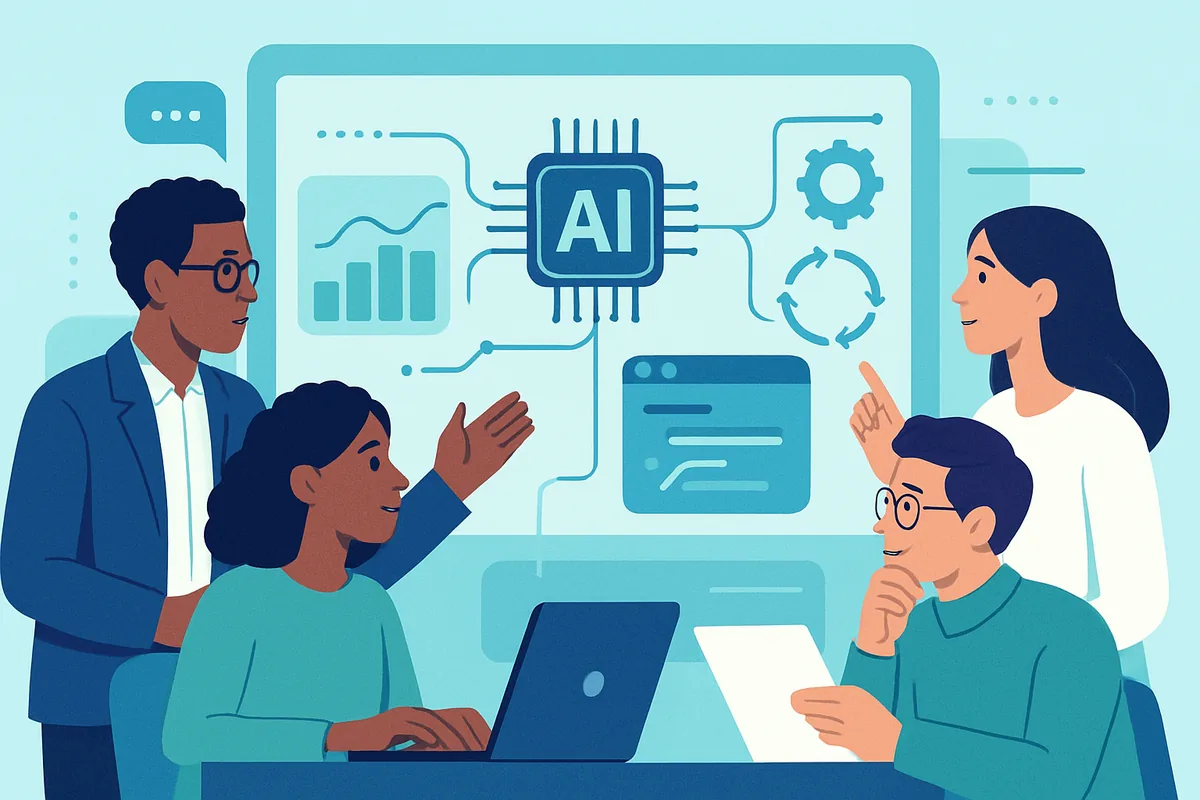
n8n is an open-source automation tool. Like Make.com or Zapier, it connects the apps you already use, watches for things to happen in one place, and then does something useful somewhere else. A new form submission becomes a row in a spreadsheet. A new email becomes a task in your to-do app. An AI model summarizes an article and posts the result to a channel. You build these workflows visually, by connecting boxes on a canvas, not by writing code.
The part that makes n8n different is the open-source part. The software is free to download, and you are allowed to run it on your own server. That is what "self-hosting" means: instead of logging into someone else's platform, you rent a small server, install n8n on it, and the whole system belongs to you. Your workflows, your data, and your login all live on a machine you control.
People self-host n8n for two main reasons. The first is cost at scale, because a flat server bill does not care how many automations you run. The second is data control, because nothing you automate ever has to pass through a third-party automation platform. If you have read our guide on hosting your own AI tools and automations, n8n is exactly the kind of tool that guide was written for.
How does n8n compare to Make.com for beginners?
Honest answer: Make.com is easier to start with, and n8n is cheaper and more private in the long run. Both are good. Which one is right depends on where you are.
Make.com is a hosted platform. You create an account, and within ten minutes you are building your first scenario. There is nothing to install, nothing to update, and nothing to back up. If that sounds appealing, our plain-English guide to Make.com is the gentler on-ramp, and the seven starter automations we recommend will give you real wins in your first week.
The trade-off is that hosted platforms charge based on usage. Every automation run consumes credits or operations, and the more your automations succeed, the more you pay. That is a perfectly fair business model, but it means your costs grow with your ambition.
n8n flips that equation. Self-hosted n8n has no per-run charges at all. Your only recurring cost is the server, which stays the same whether you run ten workflow executions a month or ten thousand. For someone who ends up automating a lot, that difference becomes meaningful fast. You also get complete control over your data, which matters if your automations touch client information, business records, or anything else you would rather not route through a third party.
- Choose Make.com if: you want the fastest possible start, you run a modest number of automations, and you do not want to think about servers at all.
- Choose self-hosted n8n if: you expect to automate heavily, you care about keeping data on your own infrastructure, or you like the idea of owning your tools outright.
What does self-hosting n8n actually involve?
Here is the whole process at a high level, with no steps hidden. This is a concept walkthrough, not a command-by-command tutorial, because understanding the shape of the work matters more at this stage.
- Rent a VPS. A VPS is a small virtual server you rent by the month. Entry plans are cheap, check current rates, and even the smallest tier runs n8n comfortably for personal use.
- Connect to your server. You log into the server through a terminal. It looks intimidating for about an hour, then it becomes routine. Modern hosts also give you a web-based control panel that softens the learning curve considerably.
- Install n8n, usually with Docker. Docker is a tool that packages software so it installs the same way everywhere. The official n8n documentation walks you through it, and the actual installation is a handful of copied commands.
- Point a domain or subdomain at it. Something like automations.yourdomain.com, so you can reach your n8n editor from a browser with a proper secure connection.
- Set a strong password and keep things updated. Your n8n instance is a door on the internet, so you lock it. Updates are an occasional command, not a weekly chore.
That is truly it. The first setup might take you an afternoon, including the parts where you get confused and search for answers. Every setup after that takes twenty minutes, because the skills transfer.
Is self-hosting n8n right for you?
Here is the honest framing, because this decision is more about temperament than technology.
Self-hosting is right for you if you are curious about how things work, patient enough to follow documentation, and comfortable being your own support department. When something breaks on a hosted platform, you wait for the company to fix it. When something breaks on your server, you fix it, usually by searching the exact error message and finding that a hundred people hit the same thing before you. Some people find that empowering. Others find it exhausting. Both reactions are valid.
Self-hosting is probably not right for you yet if you have never built an automation anywhere. Learn the concepts on a hosted platform first, where the only thing you can break is a workflow. Once connecting triggers and actions feels natural, the move to n8n is a small step instead of two leaps at once.
There is also a middle truth worth naming: you do not have to pick one forever. Plenty of people run important business automations on Make.com and experiment with n8n on a cheap VPS at the same time. The skills reinforce each other, and you will know within a month which home suits you.
What kind of server does n8n need?
Less than you would think. n8n is a lightweight application, and for personal or small-business use, the smallest VPS tier from a reputable host is enough. If you plan to run n8n alongside other self-hosted tools, or you expect workflows that process large amounts of data, one step up gives you comfortable headroom. For what it is worth, this site runs on a Hostinger KVM 2, and that class of server handles n8n plus several other applications without breaking a sweat.
Whatever you choose, pick a host with good documentation and a simple control panel, because as a beginner, the quality of the instructions matters more than a small difference in specs. And do not overbuy. Upgrading a VPS later is easy. Paying for unused capacity every month is just a slow leak.
What should you automate first with n8n?
Start with something small, personal, and slightly boring. A workflow that saves email attachments to cloud storage. A daily digest that collects items from an RSS feed and sends you one tidy message. A form that files responses into a spreadsheet and pings you when a new one arrives. Boring automations are perfect first projects because you understand every step, you notice immediately when they break, and nothing important is at risk while you learn.
Once the basics feel comfortable, n8n grows with you further than most beginners expect, including into AI-powered workflows where a model reads, summarizes, or drafts things as one step in a larger chain. That is a topic for another day, but it is a genuine reason people commit to the self-hosted path.
Next step: if you are still deciding between hosted and self-hosted automation, or you want more beginner-friendly workflow ideas before committing to a server, browse the automation hub for every guide we have published, in plain language and in order.