How do you explain AI to a child in simple terms?
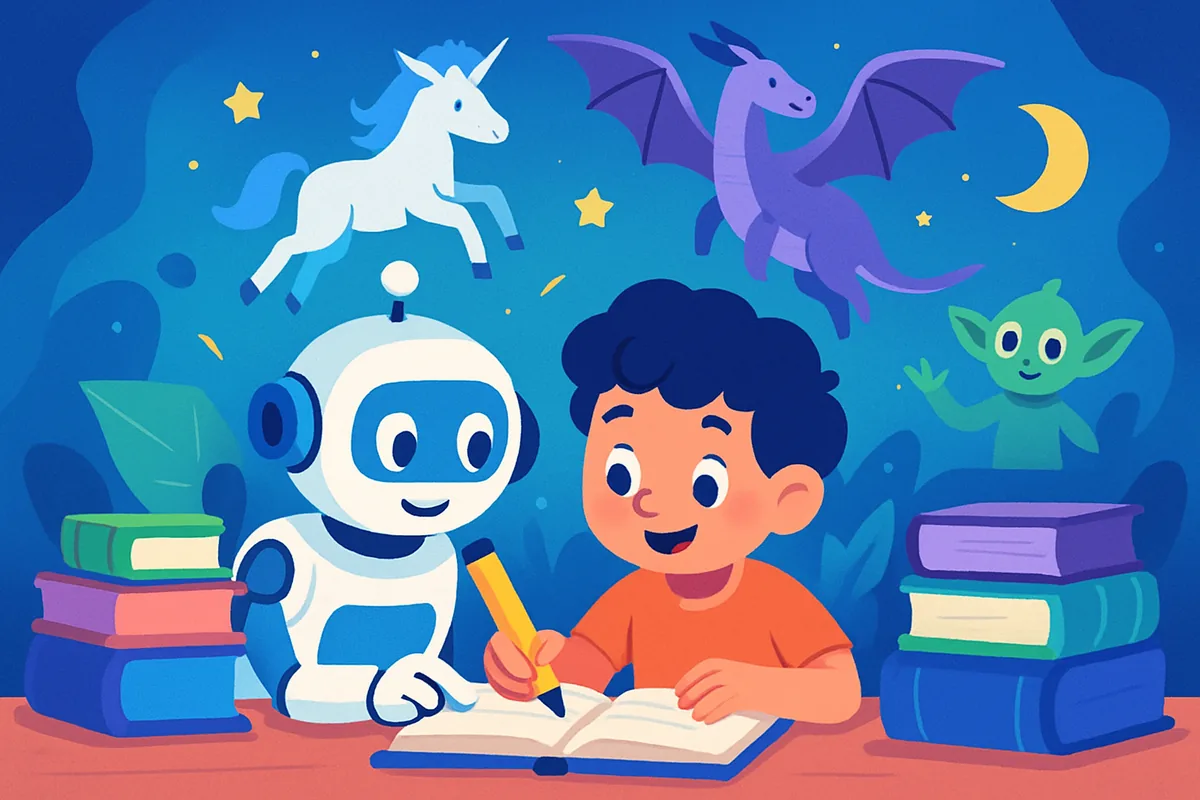
The explanation that tends to click fastest with kids: AI is like a friend who read an incredible number of books and looked at an incredible number of pictures, and got really, really good at guessing what comes next. It is not thinking the way a person thinks. It is guessing, based on patterns, and it is usually a good guesser.
This matters because kids naturally assume anything that talks back is alive or smart the way a person is smart. Correcting that assumption early, gently and without making AI sound scary, sets up every other conversation about AI safety that follows.
What is a script I can actually use with my kid?
Here is a short script you can read close to word for word, or paraphrase in your own voice, depending on your child's age:
"You know how you get better at guessing the end of a story if you've read a lot of books? AI is like that, but it read way more than any person ever could, so it got really good at guessing what to say or draw next. It's not alive, and it doesn't actually feel things, even when it sounds friendly or funny. It can also guess wrong sometimes, so we always check important stuff together, like we would with anything else we read online."
Kids often follow up with "so is it lying?" A useful answer: it is not lying on purpose, because lying requires knowing the truth and choosing to say something else. It is more like guessing confidently and sometimes guessing wrong, the way a classmate might answer a quiz question with total confidence and still be incorrect.
What are the best analogies for explaining how AI learns?
Three analogies tend to work well across different ages: the super-reader, the pattern-spotter, and the guessing game. Pick whichever fits how your child already learns best.
- The super-reader: AI "practiced" by reading a massive amount of text and looking at a massive number of images, similar to a student cramming with more books than exist in any library, and getting good at predicting what typically comes next.
- The pattern-spotter: show a child several photos of the same fruit and ask them to describe what makes it recognizable. AI does something similar with patterns in data, just at a scale no person could manage by hand.
- The guessing game: if you say "peanut butter and ___," most kids will guess "jelly." AI works the same way with far more words and pictures, constantly guessing the most likely next piece based on everything it has seen.
None of these analogies are perfect, and you do not need to explain neural networks or training data in technical terms for a child to get a useful, accurate mental model.
Is AI alive, and does it have feelings?
No, and this is worth stating plainly and repeating. AI is a program running on computers, not a living thing, and it does not experience emotions even when its responses sound warm, encouraging, or funny. It is producing likely-sounding words and images based on patterns.
This distinction matters most with AI chat companions designed to feel like a friend. Kids and teens can form real emotional attachments to something that sounds consistently kind and available, so naming clearly that it is not a person, and does not miss you or care about you the way a person does, is a conversation worth having more than once.
What family ground rules make sense for kids using AI?
Set simple rules around three areas: homework help, chat companions, and image generation. None of these require banning AI, just being deliberate about how it gets used.
- Homework: AI can help explain a concept or check an answer, but the actual learning and writing should stay the child's own work. Treat it like a tutor who is always available, not a shortcut that replaces doing the work.
- Chat companions: some AI apps are built to feel like a friend, which can be genuinely appealing to kids and teens looking for connection. Talk openly about the difference between a helpful tool and a real relationship, and keep an eye on how much time gets spent there.
- Image tools: set expectations about what gets generated, especially anything involving real people's faces, and make sure kids understand AI-generated images can be shared and misused just like any other image online.
Can AI make mistakes, and how do I teach that without scaring my kid?
Yes, AI can be confidently wrong, which is actually one of the most important things for a child to understand early. It states incorrect information in the exact same friendly, certain tone as correct information, so confidence is not a reliable signal of accuracy.
A useful family habit: treat AI like a smart but occasionally wrong friend. Great for brainstorming, explaining a tricky word, or generating ideas, but anything that matters, a school fact, a health question, a safety question, gets checked against a trusted adult or a reliable source. This framing builds healthy skepticism without making AI feel threatening.
What age should this conversation start?
Most children can grasp a simplified version of the guessing-game analogy by around six or seven, particularly if they already talk to a voice assistant or use tablet apps with AI features. There is no strict cutoff. Match the depth of explanation to your child rather than a fixed age, and revisit the conversation as they run into new AI tools at school or with friends.
Younger kids often only need "it's a guessing game, not a person." Older kids and tweens can handle more nuance about training data, mistakes, and why chat companions are not real friends. Our beginner's guide to AI ethics and risks covers the deeper version of these concerns if you want to think through them yourself first.
What is a realistic, non-alarmist way to think about kids and AI?
AI is not inherently dangerous for kids, but unsupervised use does carry real, manageable risks: inaccurate information delivered confidently, exposure to content that is not age-appropriate, and emotional attachment to chat companions that feel like friends. None of these require avoiding AI altogether.
The most effective approach is the same one that works for most family technology questions: clear ground rules, ongoing conversation instead of a single talk, and treating AI as a tool to understand together rather than a threat to guard against alone. Our roundup of common AI myths is a good next read if your child (or you) has heard some dramatic claims about AI worth sorting from fact.
Next step: for the fuller picture on data privacy, senior scam awareness, and a balanced answer to "is AI dangerous," visit our AI safety hub.