Will AI replace all human jobs?
No. AI is better understood as automating specific tasks, particularly repetitive or data-heavy ones, than as replacing entire jobs wholesale. Most jobs are a mix of tasks, some easy to automate and some requiring judgment, creativity, or human connection that current AI cannot reliably provide.
The realistic pattern so far looks like task shifting rather than mass unemployment: AI handles data entry or first-draft writing, and people shift toward reviewing, strategizing, or the parts of a job that involve genuine human interaction. That does not mean the transition is painless for everyone, some roles genuinely shrink, but "AI takes every job" oversimplifies a messier, slower process.
It also helps to notice which tasks are most exposed. Highly repetitive, rules-based work, like sorting data into categories or drafting a routine template, is far more automatable than work that depends on reading a room, negotiating, or handling an unexpected situation. Most careers will change in the details of what a workday looks like well before, or instead of, disappearing entirely.
Is AI always right?
No, and this is one of the most important myths to unlearn early. AI can be confidently wrong, stating incorrect information in the exact same tone as correct information, because it is producing likely-sounding answers based on patterns rather than verifying facts against reality.
If the data an AI model learned from is incomplete, outdated, or reflects existing biases, the output inherits those flaws while still sounding certain. A practical habit that solves most of the risk here: treat AI output as a useful draft or starting point, and verify anything that actually matters, health, legal, financial, or factual claims, against a reliable source.
Is AI too complicated for a beginner to understand or use?
No. While the underlying engineering behind AI models is really complex, using a consumer AI tool day to day does not require any of that knowledge. Most tools respond to plain, conversational language, so there is nothing technical to learn beyond describing what you want.
Chat assistants let you ask questions the same way you would ask a knowledgeable friend, and voice assistants respond to natural speech. The complexity lives at the research and infrastructure level, not at the level of someone typing a question into a chat box or asking a smart speaker for the weather.
Is AI sentient or does it have feelings?
No. Current AI operates on statistical patterns learned from data, not consciousness, and it does not have subjective experience even when its responses sound warm, funny, or emotionally aware. It is producing likely-sounding language, not feeling anything behind it.
Sentient or self-aware AI, often discussed under the term artificial general intelligence, is the subject of ongoing research and debate, but it is not something in everyday consumer use today. Treating a chat tool's friendly tone as evidence of real feelings is a common but understandable mistake, since the language is specifically designed to feel natural and responsive.
Is AI only relevant for tech companies and the future?
No, AI is already embedded in ordinary daily life for most people, whether they notice it or not. Spam filters, streaming recommendations, voice assistants, autocomplete, and map navigation all rely on AI running quietly in the background.
This myth persists partly because dramatic AI headlines tend to focus on frontier research or hypothetical futures, which makes AI feel distant and futuristic. In practice, most people already use AI-powered tools multiple times a day without needing to think about the technology behind them.
Does using free AI tools mean giving up your privacy entirely?
No, though this myth contains a grain of truth worth understanding rather than dismissing. Many free AI tools do use your conversations to improve their models unless you turn that setting off, but that is a specific, manageable privacy tradeoff, not an all-or-nothing surrender of your personal information.
The accurate version of this concern: check your privacy settings, avoid pasting sensitive details like passwords or financial account numbers, and treat free and paid tools with the same scrutiny rather than assuming price alone determines safety. Our AI data security guide walks through the specific settings worth checking.
Why do these myths spread so easily?
AI myths spread easily for a familiar reason: extreme claims, whether alarming or utopian, are more attention-grabbing than the nuanced, moderate reality. "AI will take every job" and "AI will solve every problem" both travel further than "AI changes some tasks and has real limitations."
Media coverage and marketing also tend to emphasize either dramatic risk or dramatic capability, since both extremes perform better for clicks and attention than a balanced explanation. Being aware of that incentive helps you read AI news with a healthier degree of skepticism, without swinging to blanket dismissal either.
Social sharing patterns make this worse. A headline claiming AI will replace every job, or that a chatbot has become sentient, spreads faster than a careful explanation of what actually happened, because strong claims are simply more shareable than nuanced ones. Recognizing this pattern is often enough to pause before accepting a dramatic AI claim at face value, whether it sounds thrilling or frightening.
What is a realistic way to think about AI capabilities?
A realistic view sits between the extremes: AI is a useful tool with real limitations, not a miracle and not a menace. It handles narrow, specific tasks well, often better and faster than a person, but it does not understand context the way a person does and it makes mistakes confidently.
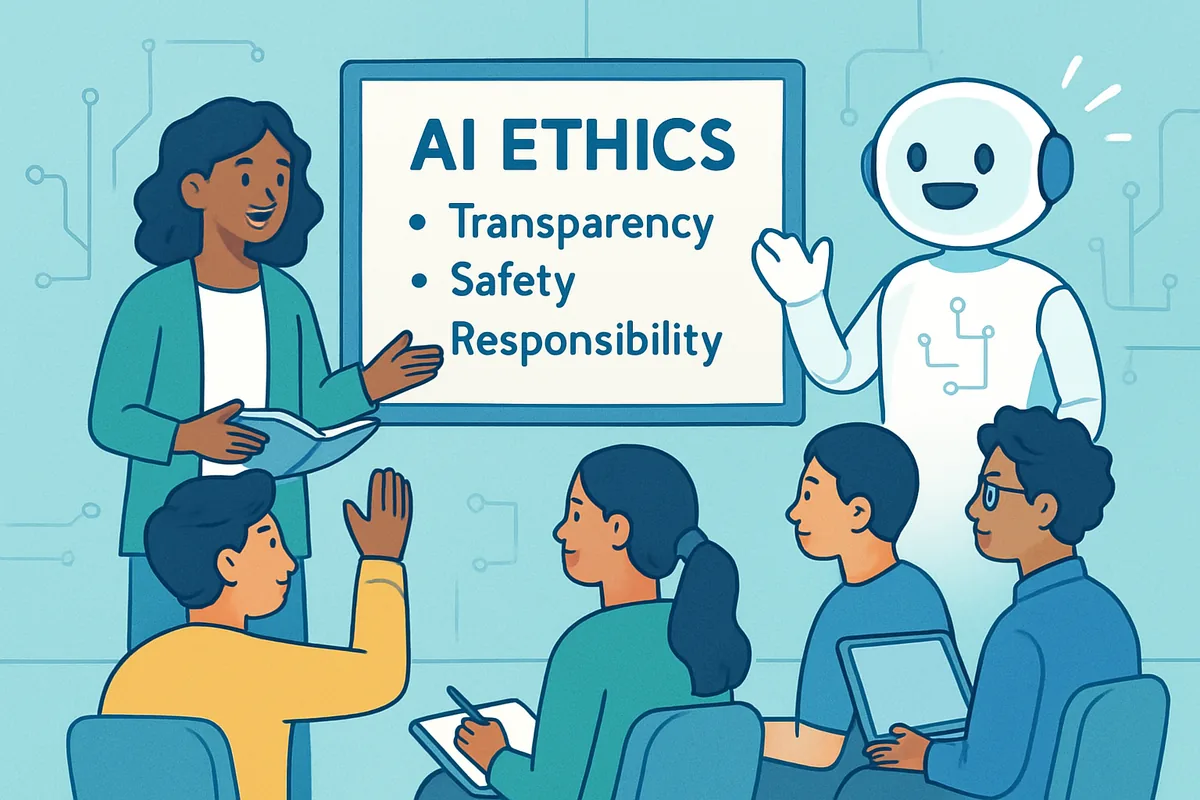
Holding both of those facts at once, useful and limited, is the most accurate everyday mental model. Our beginner's guide to AI ethics and risks goes deeper into the realistic concerns worth taking seriously, like privacy and misinformation, versus the more sensational fears that get more attention than they deserve.
If you are explaining any of this to a child, our kid-friendly guide to artificial intelligence covers the same "it's a guesser, not a thinker" idea in age-appropriate language and analogies.
Next step: for the full picture on AI safety topics, including data privacy and scam awareness, visit our AI safety hub.