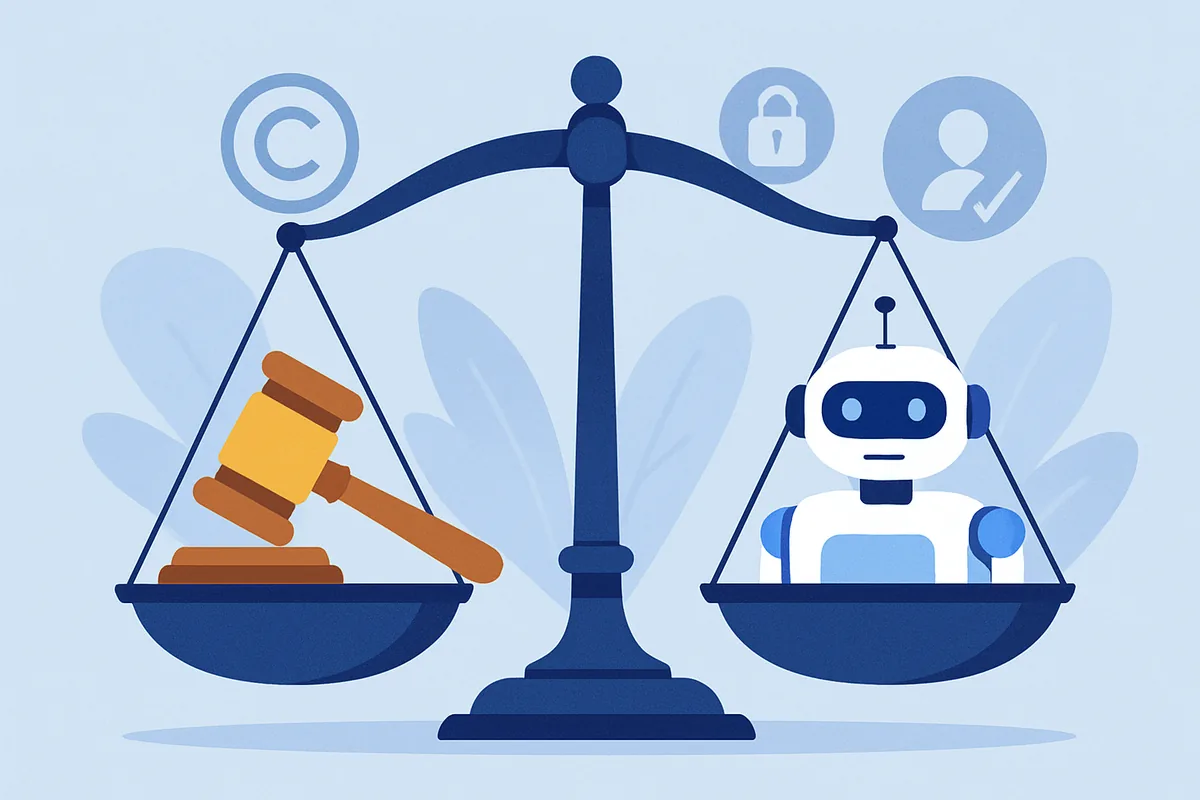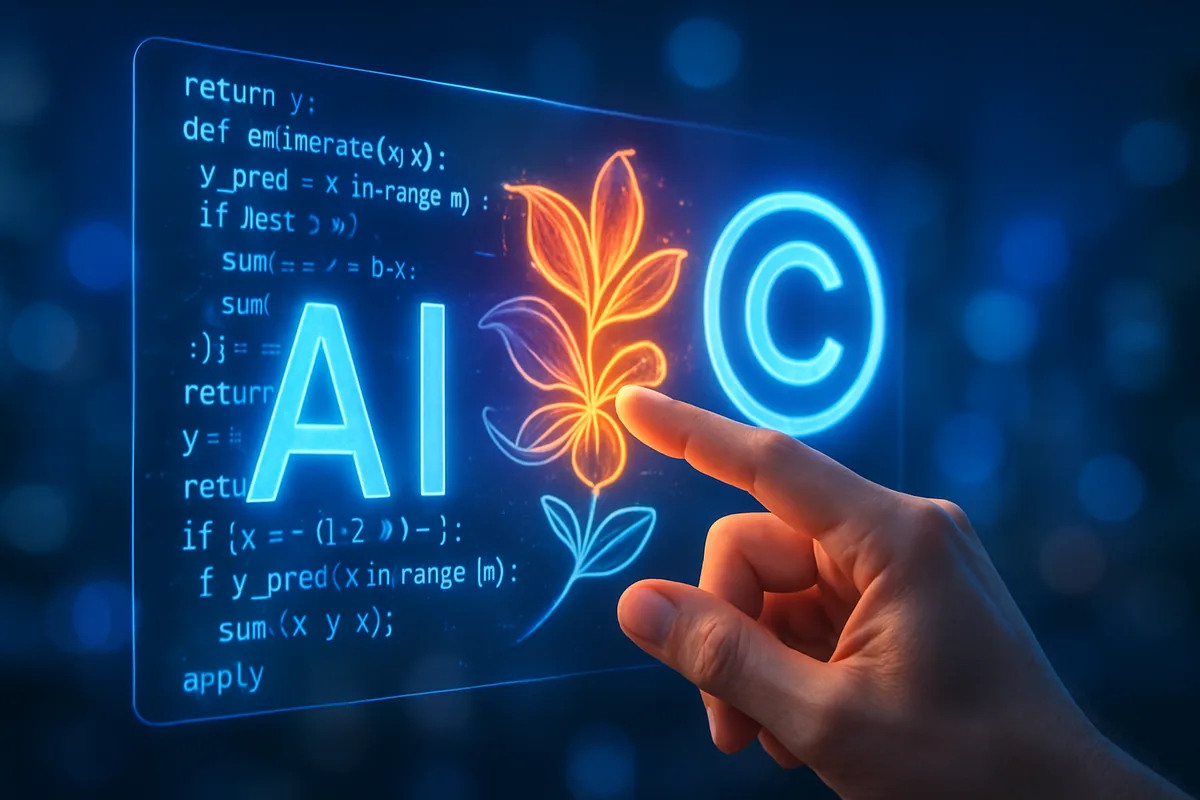
Is it legal for AI companies to train on copyrighted material?
This is really unsettled and varies by jurisdiction, with active legal and policy debate rather than one clear, universal answer. Different countries and legal systems are approaching the question differently, and the landscape continues to shift as new guidance and rules emerge.
As an everyday AI user, you typically have no control over an AI company's training data decisions, so this is not something you need to resolve personally. It is useful background, though, for understanding why generated content sits in a gray area rather than a clearly settled legal category. We are intentionally not citing specific rulings or cases here, since the details vary by country, change frequently, and a general guide cannot substitute for current, jurisdiction-specific guidance.
It also helps to understand why this question is hard to settle quickly. Training a model involves processing enormous amounts of existing text and images, and legal systems built long before this technology existed are still working out which existing doctrines, if any, apply cleanly to that process. Different countries are reaching different conclusions, and the pace of change means guidance from even a year or two ago may already be outdated.
Do I own the copyright to content an AI generates for me?
It depends on your jurisdiction, the specific platform's terms of service, and how much creative input you contributed beyond a prompt. Several legal systems currently require meaningful human authorship for copyright protection, meaning purely AI-generated content with minimal human input may not receive the same protection as work you create yourself from scratch.
Generally, more substantial human creative input, detailed direction, iterative refinement, and significant editing of the output, tends to support a stronger ownership claim than a simple prompt alone, though this varies and is not a guaranteed formula. Our who owns AI art guide goes deeper into this specific question for visual content.
What other legal issues matter beyond copyright?
Copyright is not the only legal consideration worth understanding when using AI regularly. Data privacy, misinformation, and bias each carry their own separate legal and ethical questions, and all three come up often enough in everyday AI use to be worth basic awareness.
- Data privacy: sharing personal information, yours or someone else's, with an AI tool can raise privacy questions depending on your location and the type of data involved. Avoid sharing sensitive personal data in prompts as a general rule.
- Misinformation: generating and sharing false information about real people or events can create legal exposure separate from copyright, particularly if it causes real harm. Review AI-generated content for accuracy before publishing or sharing it.
- Bias and discrimination: AI models can reflect biases present in their training data, which raises discrimination concerns in higher-stakes contexts like hiring, lending, or housing decisions. Be especially cautious using AI output in these areas without human review.
How can I use AI more responsibly as a beginner?
A handful of habits address most of the everyday legal and ethical risk without requiring legal expertise: adding real creative input, reviewing output before publishing, checking current platform terms, and being careful with sensitive data.
- Add meaningful creative input. Detailed direction and editing strengthen both your ownership position and the quality of the final result.
- Review before publishing. Check generated content for accuracy, potential similarity to existing copyrighted work, and anything that could be considered misleading or harmful.
- Check current terms of service. Platform terms describing ownership and commercial use rights change over time, so check the current version for the specific tool you are using.
- Avoid sharing sensitive data. Keep passwords, financial details, and confidential information out of prompts, regardless of the platform.
Our AI data security guide covers the privacy side of this in more detail, including which settings are worth checking on popular tools.
None of these habits require legal training to apply consistently. They function more like a seatbelt than a legal strategy: simple, low-effort precautions that meaningfully reduce risk without needing to fully resolve the underlying uncertainty first. Building them into your normal workflow, rather than treating them as an occasional extra step, is what actually makes them effective over time.
Should I get legal advice before using AI-generated content commercially?
For anything with real commercial or legal stakes, a business, a paid product, branded content, yes, a qualified professional who can assess your specific jurisdiction, platform terms, and use case is worth consulting. This guide explains the general landscape, not advice tailored to your particular situation.
For casual or personal projects, understanding this general landscape and building the habits above is usually sufficient. The legal picture here continues to evolve, so what applies today may be refined as new guidance and rules emerge in different jurisdictions.
It is reasonable to feel like there is no fully satisfying answer right now, because in a strict sense there is not one yet. Treating this as an evolving area to stay informed about, rather than a settled rulebook to memorize once, is the most accurate way to approach it as both a creator and an everyday user.
Why does this area feel so confusing compared to other legal questions?
AI copyright and legal use feels more confusing than most areas because the underlying technology is new relative to the legal frameworks meant to govern it, and different countries are reaching different conclusions at different speeds. There is no single global standard to point to, which is truly part of why the landscape feels unsettled rather than a sign that you personally are missing something obvious about how the rules work.
Our guide to the AI copyright chaos looks specifically at why competing claims and jurisdictional differences make this such a confusing space for creators, and offers practical guidance for navigating the uncertainty rather than waiting for it to resolve.
Next step: for a broader, balanced look at AI risks beyond legal questions, visit our beginner's guide to AI ethics and risks, or return to our AI safety hub.