What is artificial intelligence, exactly?
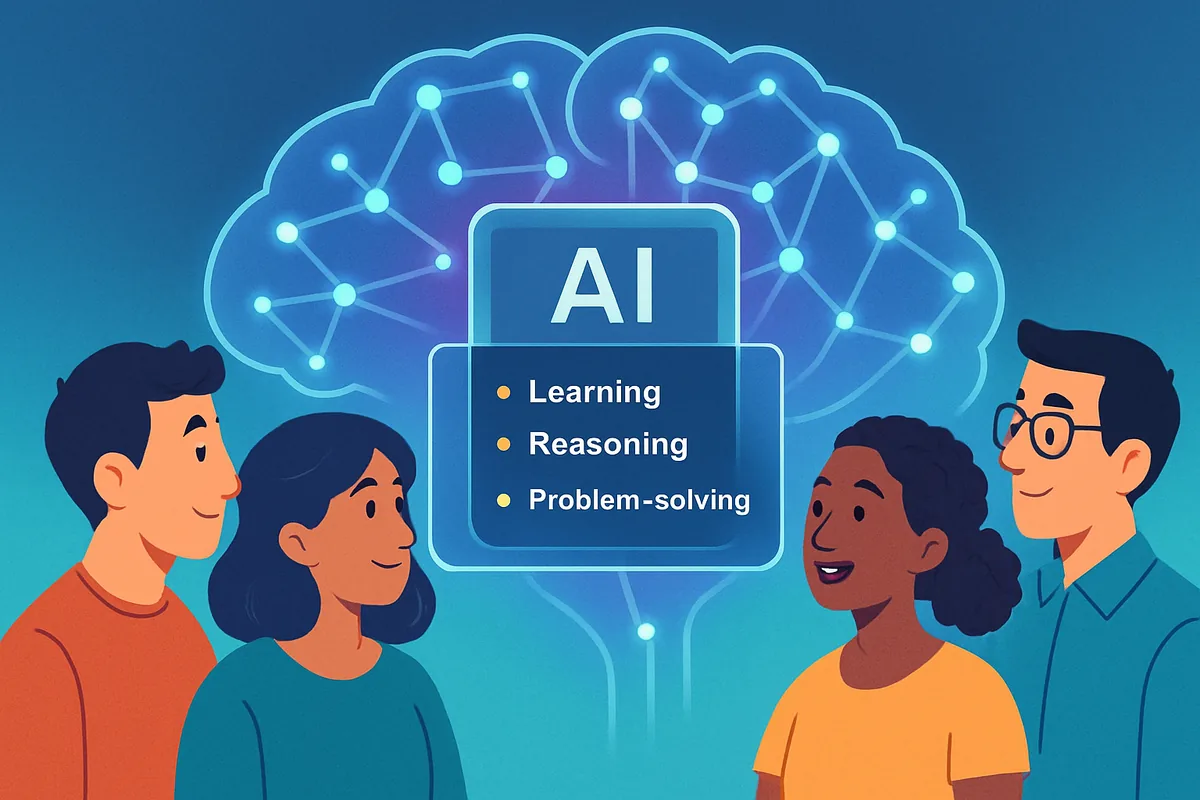
Artificial intelligence is the broad goal of building computer systems that can perform tasks normally requiring human thinking, such as recognizing patterns, understanding language, and making decisions. Rather than following a fixed set of programmed instructions, AI systems learn from data and adapt based on what they find in it.
That distinction matters because it explains why AI feels so different from older software. A traditional program does exactly what its code specifies. An AI system trained on enough relevant data can handle situations its developers never explicitly anticipated, which is what makes tools like chat assistants and recommendation engines so flexible.
How do machine learning and deep learning fit into AI?
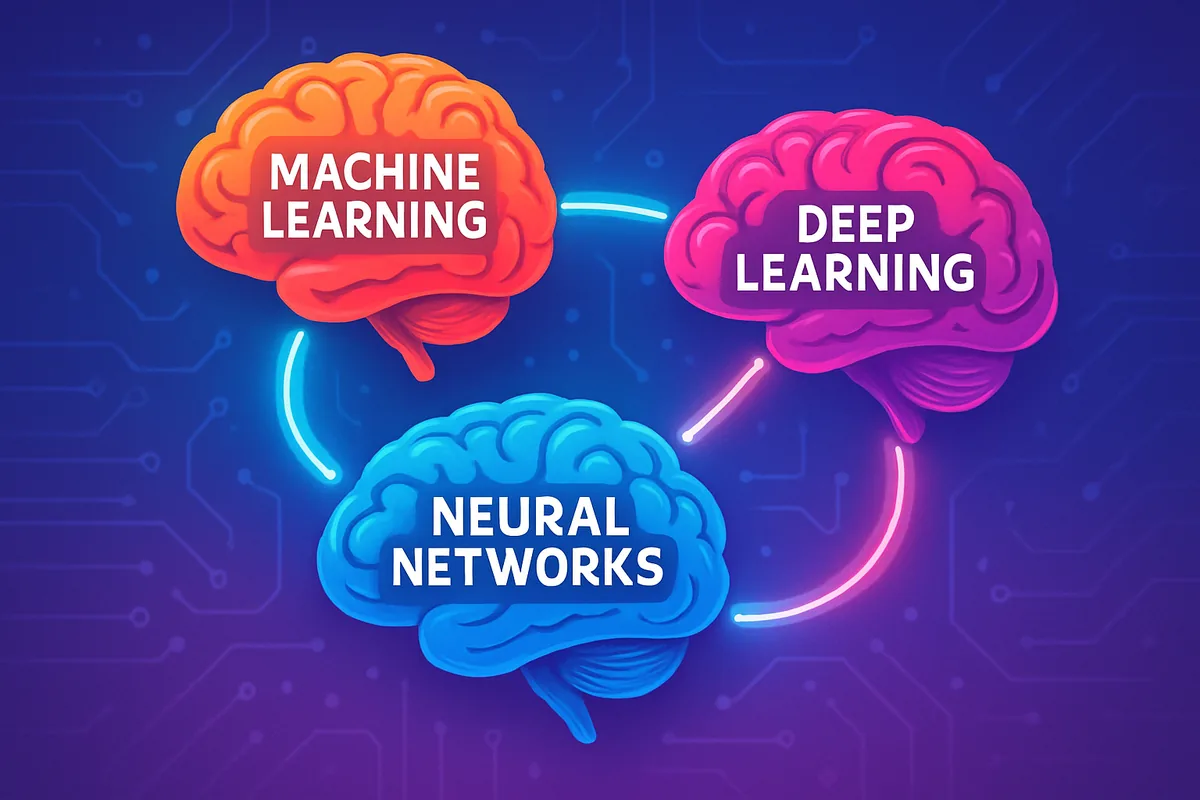
Machine learning and deep learning are two nested approaches within the broader field of AI, not separate technologies. Machine learning is about learning from data instead of fixed rules, and deep learning is a more advanced version of that using layered neural networks.
- Machine learning (ML): a subset of AI where systems learn patterns from data rather than being explicitly programmed for every case, similar to a spam filter that learns to recognize unwanted email from examples.
- Deep learning (DL): a more advanced form of machine learning that uses artificial neural networks with multiple layers to analyze complex data like images, speech, and language, with impressive accuracy.
For a fuller breakdown of how these ideas connect, including neural networks specifically, see our machine learning vs deep learning vs neural networks guide.
How does an AI system actually learn?
AI systems learn by processing large amounts of labeled or unlabeled data, adjusting their internal parameters until they reliably recognize the patterns that matter for a given task. The more relevant data a system sees, the better it typically gets at making accurate predictions.
A simple way to picture this: to teach a system to recognize cats in photos, you would show it thousands of images labeled "cat," and it would learn to identify shared features like ears, whiskers, and shape well enough to recognize cats in brand-new images it has never seen before. Chat assistants work on the same underlying principle, just applied to text instead of images.
What is the difference between narrow AI and general AI?
Nearly all AI in active use today is narrow AI, designed to perform one type of task well, like writing text or recognizing faces, rather than possessing broad human-like intelligence. General AI, capable of learning and applying knowledge across any task the way a person can, remains a research goal rather than a deployed technology.
This distinction is worth keeping in mind whenever an AI tool feels impressively capable. Even a very strong chat assistant is still narrow AI, excellent within its trained domain of language and reasoning, but not a general intelligence with awareness or judgment beyond that scope.
Where does AI already show up in daily life?
AI already powers voice assistants, recommendation systems, spam filters, and chat assistants, often working quietly in the background without users realizing AI is involved at all. It shows up across entertainment, shopping, communication, and increasingly healthcare and finance.
- Voice assistants: Siri, Alexa, and Google Assistant use AI to interpret spoken commands.
- Recommendation systems: streaming and shopping platforms suggest content based on your past behavior.
- Healthcare: AI supports image analysis and diagnostic assistance alongside clinical judgment.
- Finance: AI helps detect fraud patterns and support risk assessment.
- Chat assistants: tools like ChatGPT, Claude, and Gemini answer questions and help with everyday writing. Our AI models hub compares the major options.
Why does AI matter enough to learn the basics?
AI already influences decisions that affect daily life, from what content you see online to how quickly a customer service issue gets resolved, which makes a basic understanding useful even if you never build anything with it yourself. Knowing roughly how AI works helps you use it more effectively and evaluate its output more critically.
It also helps to separate genuine capability from marketing hype. AI is genuinely useful for writing, research, and pattern-based tasks, but it is not infallible, and it does not "think" the way a person does. Keeping that realistic picture in mind makes it easier to get real value out of AI tools without either dismissing them or trusting them blindly.
What are common misconceptions beginners have about AI?
The most common misconceptions are that AI is always accurate, that one model is objectively the best for everything, and that using AI requires technical expertise. All three are easy traps, especially early on.
AI models generate the most likely-sounding response based on patterns in their training data, not a verified lookup, so they can state incorrect information confidently. There is also no single "best" AI model, since strengths vary by task, and free tiers from major providers are capable enough that most beginners do not need to pay for anything right away.
How can a beginner start exploring AI without coding?
The most accessible entry point is a free-tier chat assistant applied to a specific task you already do, like drafting messages or summarizing articles. From there, no-code automation platforms let you connect that assistant's output to other apps you already use.
For example, you could use an AI assistant to summarize customer feedback and then use a platform like Make.com to route that summary to the right team automatically, without writing any code. Our no-code automation hub covers this kind of workflow in more detail, and our AI glossary for beginners is a useful reference for any unfamiliar terms along the way.
What should a beginner watch out for when using AI?
The three habits worth building early are verifying important facts, protecting your private information, and avoiding over-reliance. AI tools are helpful assistants, not authorities, so treating their output as a strong first draft rather than a final answer keeps you in control.
Always double-check anything that carries real consequences, such as medical, legal, or financial details, against a trusted source. Avoid pasting sensitive personal or client information into a chat assistant, since that data may be stored or used to improve the model. For a fuller look at staying safe, our AI safety and privacy hub walks through practical settings and ground rules for individuals and families.
Next step: to see how these concepts apply specifically to the most popular AI tool, read our guide to how ChatGPT works.